
This is an excerpt from The3rdSpace blog “The Space In-Between”, available HERE. This beautiful writer is an anonymous client of Horse Sense North, and shares about their horse experience with our equine partner, Flurry.
Trauma, the Nervous System, and Connection
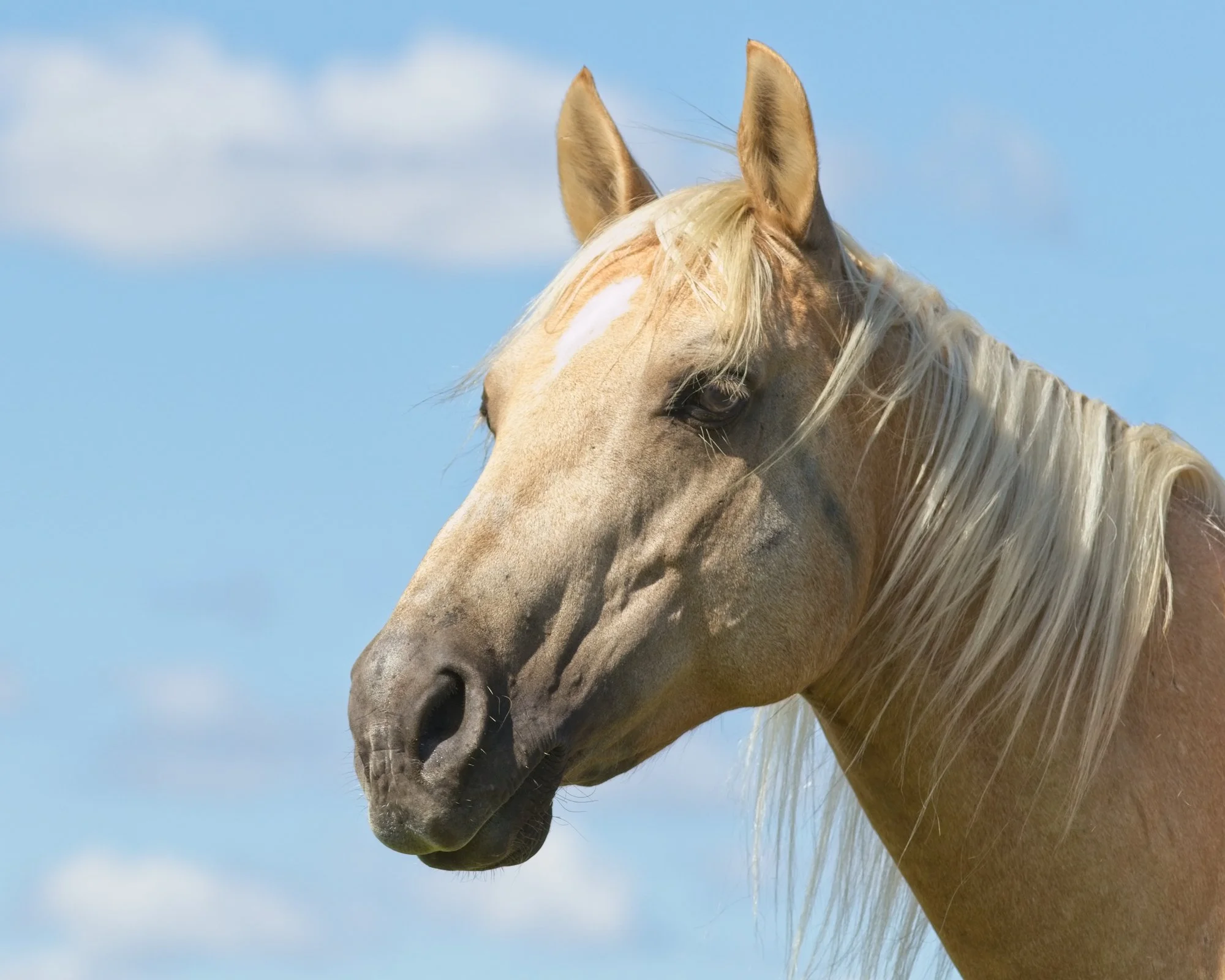
One of our horse partners, Flurry.
Relational trauma taught me to stay on guard in relationships. I learned to expect inconsistency or withdrawal, and to keep scanning for signs that I was safe or valued. Over time, I stopped responding to what was actually happening and instead responded to what I feared might happen. It made relational cues harder to read and real presence harder to access.
Horses notice this right away. They read our nervous system before they read our behaviour. Any subtle pressure for them to respond, or reassure, or to connect registers in their bodies. I have learned that because horses are prey animals, they respond to that very pressure by moving away.
Connection grows in small moments — tiny shifts and brief pauses. Trauma makes it easy to miss them, as your system is bracing for rejection or chaos, always trying to make sure you’re safe. Safety starts to feel conditional: If they respond a certain way, I’m okay. If they don’t, I’m not.
Horses don’t seem to respond to that conditional safety. They do, however, respond to clarity, groundedness, and consistency.
That’s why relational work with horses has been so powerful for me. Again and again, they teach my nervous system — in a gentle wordless way — that safety doesn’t have to be earned and that connection can exist in presence alone.
Boundaries in the Field
My visit to Horse Sense North began with a conversation about what it looks like when our heart, brain, and nervous system are in sync or out of sync. About how quickly these shifts happen, how they communicate subtly, and how we sometimes override them without noticing.
A heart‑rate variability monitor made those shifts visible: green for calm, blue for settling, and red for alert. A simple change in tone could move me from green to red, registering in my body before my mind processed it. With intention and breath, though, I could return to calm. Seeing the monitor confirm what I felt was validating. My body was telling the truth — and the horse would feel that truth too.
My intention was to show up as I was, present in the moment, without performing calm or trying to control the experience. It sounded simple, but it took vulnerability and courage for someone with a trauma history.
When we arrived at the arena, the wind was blowing, and snow pellets and debris were hitting the metal siding. Flurry, a horse waiting inside, was a bit unsettled, mouthing the chain on the arena gate.
Carmen, the equine-assisted learning facilitator, explained that nibbling was a self-soothing fidget. She showed me how to set a boundary around it with a steady hand up, creating space.
When I stepped into the arena, Flurry tested me immediately. For the first time in a long while, I held my boundary without hesitation or fear of losing connection. I simply said no — with my body and my actions. He respected it.
We walked together for a while, adjusting to each other’s rhythms and space. When I entered his space and he did not want me there, he’d either try to nibble or leave the space, signalling his needs. I responded with awareness.
When a sudden noise startled us both, and Flurry bolted, I grounded myself by breathing, staying in place and holding intentional presence. He returned to the space quickly, and we co-regulated. That moment showed me that storms will come, inside and outside, but we can return to calm. Presence doesn’t require more than presence. We can stay connected through the disruption. We can find our way back.
By the end of the session, I understood something that I’d never fully embraced: boundaries are necessary. I’d worried they would create disconnection, yet with Flurry, the opposite happened. The clearer I was, the safer he felt, and the safer he felt, the more connected we became.
Boundaries are clarity, and clarity creates safety. Trust begins with the courage to say: This is my space. This is what I need.
This is an excerpt from The3rdSpace blog. Read the full post HERE.